Showing posts with label art. Show all posts

Thursday, March 10, 2016


J

apanese Beauties

Mixed media works by André Werner. Images of Japanese Women transfered onto illustrations of the Jin Ping Mei (Kin Ping Meh). These small phototransfer/collages have been enlarged as cibachrome prints.
 via Art Yes No

All untitled, phototransfer/collage, ca. 15,2 x 11 cm | 6″ x 4,3″ (as cibachrome, 200 x 146 cm | 79″ x 57″ ) 1992

Tuesday, March 20, 2012

The Groovy Dada Lounge Revisited


Ann Magnuson when she was the manager of Club 57 
by Robert Carrithers 

 
Photographs by Robert Carrithers: Basquiat, Haring, the New York scene in the 1980s and the infamous Club 57.
 
At Fotograf Gallery, Školská 28, Prague

One staircase led to heaven the other to hell” says Robert Carrithers of a building in New York’s St. Mark’s Place Street, number 57.  The building whose basement housed, in the late 1970s and early 1980s, Club 57 - a creative laboratory for all non-conformists and free-thinkers from the East Village - actually belonged to the central offices of the Polish Catholic Church.

At that time New York was a city on the verge of bankruptcy and today’s luxurious East Village resembled a war zone. Refined citizens had long ago left the area as part of a progressive suburbanisation.  The area with burnt up brick buildings – a last ditch attempt by desperate property owners to earn some money was more than often insurance fraud – was left in the hands of drug dealers, immigrants and also artists working in all disciplines. The police didn’t even bother to patrol there, which was good for anyone annoyed by having the authorities riding their back, artists and criminals alike.  “It was often a matter of life and death.  You had to have eyes in the back of your head and constantly watch what was happening in the street. It was so intense that sometimes you would find a corpse lying on the sidewalk,” recalls Carrithers, who moved to New York from Chicago in 1979. He wanted to study photography, film and acting there.  The apartment that he could afford to rent was less than a 10-minute walk from Club 57.

The punk and disco scenes concentrated around the CBGB and Studio 54 clubs were losing their sense of novelty and originality, when out of nowhere a performer like Klaus Nomi appeared.  This was a man, who sang opera in the costume of a Dutch Pierrot.  Club 57 was in fact founded by two friends, who loved vaudeville – Susan Hannaford and Tom Scully – and was run by director and performer, Ann Magnuson (pictured above), who hosted its first performance.

“This place was fascinating in that, while artists had earlier met in bars or at concerts, they chatted and they drank, but in Club 57 they created something together.  Here concerts mixed with exhibitions and performances,” stresses Carrithers, when speaking of the community that first made him feel at home.  Ann Magnuson thought up theme parties for every other night of the week.  She found the decor and the furniture in the streets. Keith Haring had his first installation there and created his signature work, as did Kenny Scharf and Jean Michel Basquiat.

Club 57 exorcised America’s evil spirit. It went wild from “camp” aesthetic.  With a Dadaistic fascination and vigour, it seized on the suburban supermarket culture; stores that had become museums of the contemporary lifestyle and its plastic kitsch.  During one evening a country-western evening might take place on piles of hay, the next a burlesque event and an Elvis memorial, then a performance showing John Sex performing with his python snake Delilah or a concert by singer, Wendy Wild, and her group, The Mad Violets, which took the public on a joint trip, when hallucinogenic mushrooms were thrown into the crowd.  The group, Pulsallama, was also born here.  This was a group of twelve or thirteen girls, who sang in the style of Greek chorales, and when doing so banged on beer bottles, pans, cowbells and shot off kids‘ toy machine-guns.  Pulsallama made it so far that in 1982 they were the opening act at several concerts by The Clash.


Even almost thirty years after its closing in 1983, Club 57 is still a legend that defined a period of pop culture and still inspires it.  Many of the artists tied to the institution were unable to face up to their own wildness, drugs or the incontrollable rise of AIDs.  They died.  Others died only to become immortal (Haring, Basquiat).  Others survived to become famous later (Ann Magnuson, Marc Shaiman, Scott Whitman). Robert Carrithers was one of them.  He spontaneously documented everything that happened in the club.  The performances, the birth of success, the first exhibitions and the backstage area.  In his moment shots and portraits, which will be shown for the first time in the Czech Republic, barmen meet with writers, film-makers and future celebrities.  Thus a unique testimony was created; one that is as unbridled image-wise as the Club 57 program.

Robert Carrithers is an American photographer and film-maker, who lives in Prague.  Besides the Club 57 scene he documented the post-November cultural scene in the Czech Republic and has been working for a long time on the series, Bohemian Nude.  He is preparing a documentary on the Prague-Berlin-Australian, post-punk band, Fatal Shore. He also took part in the making of the documentary Autoluminescent about the Australian musician Rowland S. Howard (dir. Richard Lowenstein). In February he was part of The 8th Berlin International Directors Lounge not only as a director, but olso as a photographer documenting the 11 day film and club frenzy.


The Groovy Dada Lounge Revisited, Fotograf Gallery, Školská 28, Prague

21 March – 20 April 2012
     
Opening attended by the artist:
20 March, 18:00–21:00

Guests:
DJ Miki
Mark Steiner & His Problems
A showing of films of Cinema of Transgression by Nick Zedd

Curator: Pavel Turek

Wednesday, January 11, 2012

Twilight Zone


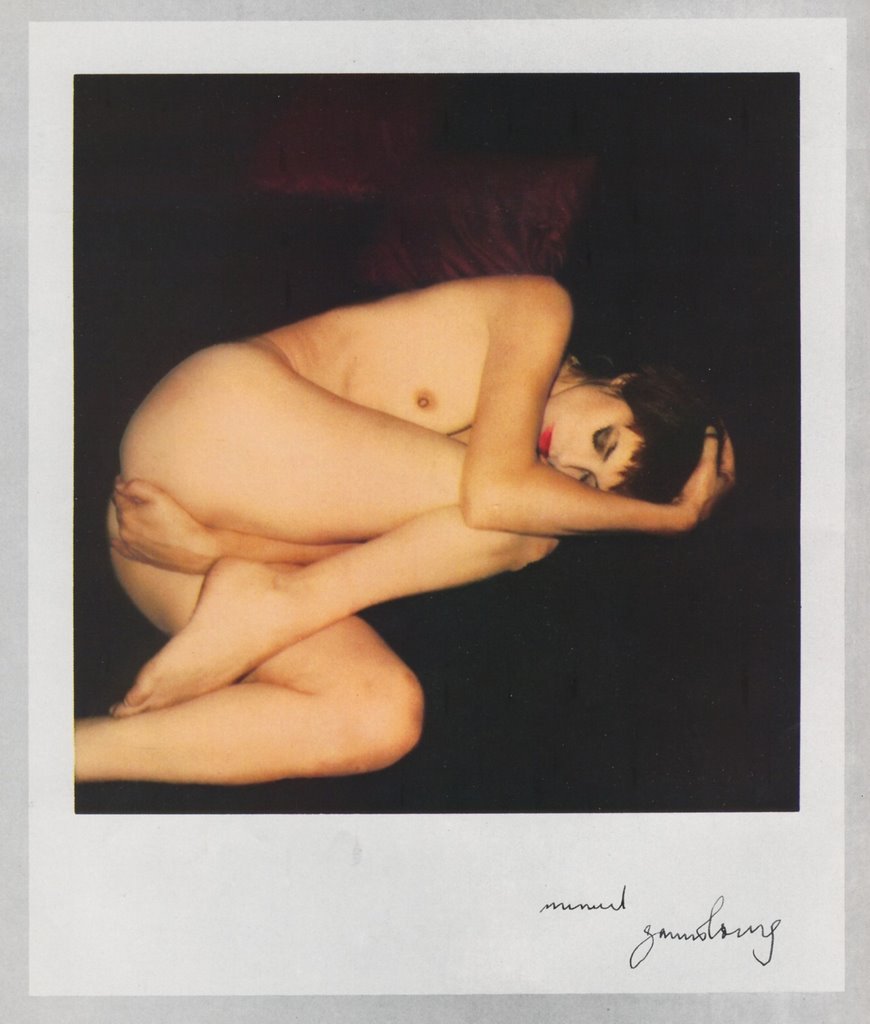
Miron Zownir, once labeled by the American author Terry Southern as THE POET OF RADICAL PHOTOGRAPHY, took up photography in the late 70s during the hey-days of the punk-phenomenon, delivering a tight portrayal of the movement and its peculiar attitude towards life in limbo between a utopian vision of anarchy and nihilistic self-destruction.

In 1980, he emigrated to the USA, where he lived for the next fifteen years; first in New York, then in Los Angeles, and Pittsburgh. In New York, back then arguably the world's most fascinating and permissive metropolis, Zownir's peculiar approach to cover the city's multiple-layered day-to-day lunacy was quickly recognised by the local scene and earned him a reputation as the TEUTONIC PHENOMENOGRAPHER (Village Voice).


Shot in moody, expressionistic b/w, Zownir's pictures from that period give a penetrating insight to inner-city sub-cultural spheres, which, in their original local context, have since perished in the boom of the 90s. His lens captured the untamed lust at the gay-parties, just shortly before Aids massively claimed its victims; the futile protest of artists and offbeat performers against the increasing commercialisation of Manhattan; the hopelessness on the Bowery; the shadowy world of hookers, bums, junkies.
During his long residence in America, Zownir worked not only as a photographer but also ventured into filmmaking, an ambition he had held since the mid-seventies. He wrote and directed several short underground films, which were mainly produced by Chosei Funahara, founder of the legendary band 'Plasmatics'.
In Berlin, Zownir's home since his return from Russia, he directed the documentary film BRUNO S. - ESTRANGEMENT IS DEATH, a feature-length portrayal of Bruno S., the backyard musician, painter and main protagonist of Werner Herzog's films THE ENIGMA OF KASPAR HAUSER and STROSZEK. ESTRANGEMENT IS DEATH was shown at the 2003 Berlin Film Festival, and numerous other international film festivals.
The focus on extreme subjects and extraordinary forms of the human condition continued to be the central motivation of Zownir's work.


Miron Zownirs surreal drama feature debut PHANTOMANIE was completed in autumn 2008. For the first time since decades Bruno S. again plays a leading role in in Zownirs movie which is shot in Berlin right now. In the midst of a cold, despising world he gets involved as a lonesome commuter between dream and reality.
Lately he collaborates with Birol Uenel and FM Einheit in setting up intense lectures of his book "Parasiten der Ohnmacht".


TWILIGHT ZONE at Emmanuel Post Gallery, Berlin
Grolmanstrasse 46, 10623 Berlin

January 14 - March 3, 2012, Tuesday - Saturday, 12 - 7 pm

Opening reception: Friday, January 13, 2012, 7 pm


Thursday, July 21, 2011

It's all to do with hope and memory and sensuality and involvement, really

Reflection (self portrait) 1985; Oil on canvas, 56.2 x 51.2 cm; Private collection (via  Paul Payne)


Lucian Freud, a towering and uncompromising figure in the art world for more than 50 years, has died, his New York-based art dealer said Thursday. He was 88. Known chiefly for his thickly impasted portrait and figure paintings, he was widely considered the pre-eminent British artist of his time. His works are noted for their psychological penetration, and for their often discomfiting examination of the relationship between artist and model.
“He lived to paint and painted until the day he died, far removed from the noise of the art world,” William R. Acquavella, his dealer, said in a statement.
 Freud's portraits often depict only the sitter, sometimes sprawled naked on the floor or on a bed or alternatively juxtaposed with something else, as in Girl With a White Dog (1951–52) and Naked Man With Rat (1977–78). The use of animals in his compositions is widespread, and often features pet and owner. Freud's subjects are often the people in his life; friends, family, fellow painters, lovers, children. He said, "The subject matter is autobiographical, it's all to do with hope and memory and sensuality and involvement, really."


(via Francis Bacon & Lucian Freud - Ananas à Miami)
Portrait of Lucian Freud on Orange Couch by Francis Bacon, 1965

Lucian Freud Girl With A Kitten 1947

Saturday, July 02, 2011

Soundsuits by Nick Cave

Soundsuits by Nick Cave
Chicago artist Nick Cave,  transforms found objects in this kind of sculptural costumes, which are  between art and haute couture. The Soundsuits are called like this  because when worn they emit sounds. Reminiscent of African ceremonial  costumes, he believes that the familiar must move towards the fantastic,  to evoke feelings that have no name, which are not realized except in  dreams. With this act of collecting and reconfigure, Cave manages to  construct stories.

Who says art can´t be funky?
(via We Are Selecters · You Are Selecters ♥ » )


Chicago artist Nick Cave, transforms found objects in this kind of sculptural costumes, which are between art and haute couture. The Soundsuits are called like this because when worn they emit sounds. Reminiscent of African ceremonial costumes, he believes that the familiar must move towards the fantastic, to evoke feelings that have no name, which are not realized except in dreams. With this act of collecting and reconfigure, Cave manages to construct stories.

Who says art can´t be funky?

» Soundsuits by Nick Cave

(via We Are Selecters · You Are Selecters ♥ )

(via We Are Selecters · You Are Selecters ♥ » Soundsuits by Nick Cave)» Soundsuits by Nick Cave

(via We Are Selecters · You Are Selecters ♥ )


» Soundsuits by Nick Cave

(via We Are Selecters · You Are Selecters ♥ )


Tuesday, May 31, 2011

50 minutes of porn


Alan Smithee´s latest work will be on display at the contemporary art ruhr (C.A.R.) media art fair, this weekend, 3th-5th of June. Alan Smithee, best known for his cooperations with Julia Murakami,  is represented by A&O gallery/Directors Lounge.


Alan Smithee, 50 min. of porn, 2011
from the series Reality Scans


Alu-Dibond, Lambda print, behind acrylic glass, 60 cm x 75 cm, 23.6” x 29.5” , ed. of 5/1 AP

Tuesday, May 17, 2011

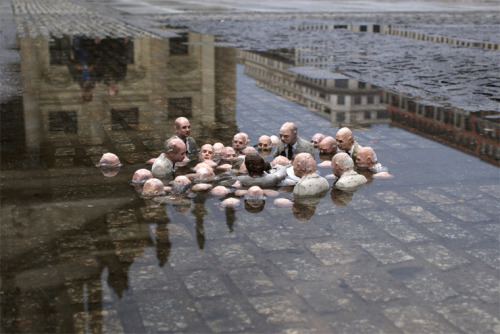
Cement eclipses

electoral campaign Gendarmenmarkt. Berlin. April. 2011


T he Cement Eclipses by Isaac Cordal, "small interventions in the big city" as he  calls them are clever placed little sculptures that pop up in several European cities. His sculptures take the form of little people sculpted from concrete in ’real’ situations. Cordal manages to capture a lot of emotion in his vignettes, in spite of their lack of detail or colour. He is sympathetic toward his little people and we empathise with their situations, their leisure time, their waiting for buses and their more tragic moments such as accidental death, suicide or family funerals. His sculptures can be found in gutters, on top of buildings, on top of bus sheltersLast year, London bases street art magazine LSD published an interview with Isaac. Excerpt:
Where and when did the Cement Eclipse campaign begin? 
I started making sculptures out of cement when I was at School of Art in 2002, but it was not until 2006 when I started to use them on the streets. The first place I left a Cement eclipses sculpture was in the city of Vigo


What’s the concept behind these small street pieces? 
Cement Eclipses is a critic/definition of our behavior as a social mass. This project intends to catch the attention on our devalued relation with the nature through a critical look to the collateral effects of our evolution. These scenes zoom in the routine tasks of the contemporary human being. They present fragments in which the nature, still present, maintains encouraging symptoms of survival. The precariousness of these anonymous statuettes, at the height of the sole of the passers, represents the nomadic remainders of an imperfect construction of our society. These small sculptures contemplate the demolition and reconstruction of everything around us. They catch the attention of the absurdity of our existence. more

 A book about the Cement eclipses will be presented Thursday 26th May 2011 6.00pm at The Pure Evil Gallery, London 

Sunday, April 10, 2011

Black Rain


Black Rain from Semiconductor on Vimeo.


Black Rain is sourced from images collected by the twin satellite, solar mission, STEREO. Here we see the HI (Heliospheric Imager) visual data as it tracks interplanetary space for solar wind and CME's (coronal mass ejections) heading towards Earth. Data courtesy of courtesy of the Heliospheric Imager on the NASA STEREO mission.

Working with STEREO scientists, Semiconductor collected all the HI image data to date, revealing the journey of the satellites from their initial orientation, to their current tracing of the Earth’s orbit around the Sun. Solar wind, CME's, passing planets and comets orbiting the sun can be seen as background stars and the milky way pass by.

As in Semiconductors previous work 'Brilliant Noise' which looked into the sun, they work with raw scientific satellite data which has not yet been cleaned and processed for public consumption. By embracing the artefacts, calibration and phenomena of the capturing process we are reminded of the presence of the human observer who endeavors to extend our perceptions and knowledge through technological innovation.

Commissioned by Animasivo Mexico City, 2009

Semiconductor is artist duo Ruth Jarman and Joe Gerhardt. Through moving image, sound and multi-media installations they explore the material nature of our world and how we experience it, questioning our place in the physical universe. Their unique approach has won them many awards and prestigious fellowships such as the Gulbenkian Galapagos, Smithsonian Artists Research and the NASA Space Sciences. Their work is part of several international public collections and has been exhibited globally including Venice Bienniale, The Royal Academy, Hirshhorn Museum, BBC, ICA and the Exploratorium.

(via We Find Wildness)

Friday, April 08, 2011

DL hits LA

DL at the LAAA
one not to miss: Directors Lounge hits LA, opening reception April 9th 6-9pm
We are screening assorted highlights at the prestigious Los Angeles Art Association (LAAA) as part of  NOT A CAR, a  special all-media, cross-cultural exhibition featuring the highlights  from our partners, the C.A.R. art fair in Essen, Germany, alongside original  contemporary artworks by Los  Angeles artists debuting at Gallery 825 on  April 9, 2011. Exhibit runs  through April 29, 2011.

pictured: some frames from
Eine Geisha wird gefilmt, a geisha being filmed by André Werner , 1993, 2 min 50 s


O
ne not to miss: Directors Lounge hits LA, opening reception April 9th 6-9pm
Directors Lounge is screening assorted highlights at the prestigious Los Angeles Art Association (LAAA) as part of  NOT A CAR, a special all-media, cross-cultural exhibition featuring the highlights from our partners, the C.A.R. art fair in Essen, Germany, alongside original contemporary artworks by Los Angeles artists debuting at Gallery 825 on April 9, 2011. Exhibit runs through April 29, 2011.

pictured: some frames from
Eine Geisha wird gefilmt, a geisha being filmed by André Werner , 1993, 2 min 50 s

Thursday, March 31, 2011

Gegen Warten | Reinhold Gottwald at a.i.p.


Gegen warten. Reinhold Gottwald´s concept for his exhibition in the a.i.p. gallery is a volatile, fragile Installation, combining room and wall space. Here he works with industrial made materials, objects that he casualla found on city sites, articles that caught his attention are rededicated and Incorporated in the installation. The open construction and mounting will take place directly in the gallery. Variability as a possibility to redefine the room at the present time.


gegen warten 
Reinhold Gottwald 
a.i.p.galerie 
opening reception April 1st, 7pm 
2.4.-7.5.2011


a.i.p.galerie artist in progress
Suarezstraße 8 14057 Berlin

Wednesday, March 23, 2011

Secret Life


Secret Life from ⓇⓇ Artstudio Reynolds on Vimeo.

Secret Life by REYNOLD REYNOLDS, portrays a woman trapped in an apartment with a life of its own. Transcending the narrative horizons of human desire, the film visits upon us a glimpse of a shared and sacred reality. A work that defies the ultimate metaphysical taboos of temporality by combining novel technique with intrepid philosophical vision; and daring to present that which is seldom, if ever, portrayed in any artistic medium.
Impossibilities are made possible through Reynolds’ signature aesthetic, a lens that can fill one with reverence for the mundane.
Have you ever wondered what time sees, experiences? Without mortal assumptions about time, the occupant of the apartment is no longer limited even to unique location, but here, seen through the eye of time, space itself is now become alive. Without the context of space and time, the woman’s mind collapses and neglects the organization of her experience, leaving her only with sensations. The viewer may ask: Is it her mind or is it time itself that creates the uncontrolled and uncontrollable environment? The work suggests that all living things are endowed with consciousness, meaning all living things have awareness. While the space increases in its activity, the woman becomes an ever more passive element in her world. She moves at a mechanical speed and her mind is like a clock whose hands pin the events of her life to the tapestry of time, all the while, the truth is transcendentally reflected in the mechanical eye of the camera. Her thoughts escape her and come to life, growing like the plants that inhabit the space around her: living, searching, feeling, breathing and dying.

HD video transferred from 16mm and photo stills

single channel HD projection 10 min or 2 channel HD projection each 5 min.

Synopsis:
Secret Life is the first of the Secrets Trilogy; a cycle exploring the imperceptible conditions that frame life and is followed by Secret Machine (2009) and Six Easy Pieces (2010)

Thursday, March 10, 2011

Wrong • The Questionable Reality of Asger Carlsen

Wrong : Asger Carlsen

The Doctor Is In(sane) : The Questionable Reality of Asger Carlsen
What are these?  They appear at first, like so many photographs do, as candid moments, mundane vernacular portraits or documents of small news events from the pages of a weekly local paper.  The on-camera flash blasts in with that harsh direct light we are used to seeing in our family albums, the black and white palette inexplicably adding to their authenticity (why is that?).  They are familiar, and there is nothing out of the ordinary in these photographs except everything. Are they even photographs? I think of the bumper sticker, stuck upside-down that reads "Question Reality", where the gesture itself is a visual pun of it's own sentiment.  The "truth" of photographs has always been in question, but in these images, it's the un-truth you are left wondering about, like vivid hallucinations you see out of the corner of your eye. They are optical illusions in the grandest sense, doctored images with invisible scars. I can look and know that no one has two functioning wooden legs, but there he is, vacuuming the floor. There he is, stopped at a red light on his motorcycle, and I believe in him, over and over. There is a funny expression that people use online in reaction to awful or disturbing images: "Cannot Un-See!" they say in dismay. The image is burned in, the damage is done. I cannot un-see the alternate reality that Asger has created in these images. I am convinced.
- Tim Barber
NYC, March 21, 2010


Wrong : Asger Carlsen


Wrong : Asger Carlsen

Friday, November 21, 2008

Poisonous Pulchritude: The world of Julia Murakami


Julia Murakami´s Anatomy of a fairy tale, miniatures in little glass cases, take a butcher at the atrocity of well known fairy tales. The Sleeping Beauty, Little Red Riding Hood, Snow White and the Little Mermaid retold by tiny, precious sculptures with a sinister shift. Saving grace does not exist for the slaughtered ladies in the realm of Julia Murakami. Broken beauties that will never come back. Frozen crime scenes scattered with pieces of evidence. Julia Murakami, herself a bewitching fairy, widens this field of tension between the fabulous and forensics by re-enacting her sites of crime. A lineup of photographs, as shot by an investigator, show the beauty herself as the victim of the creepy crimes. Thus the magical reflects back into the real, blurring the boundaries, straddling the real world and the sorcerous, a passage from fantasy to reality to fantasy. The delicate details of the dead belles are made by her own hair and blood. A possessed enchantress, perpetrator and victim, beauty and beast at once.


photos by Ulli Predeek


Julia Murakami

Thursday, March 23, 2006