Monday, March 14, 2011

Odes to the Mask

Surveying Contemporary and Modern African Masks as Sculpture
Metropolitan Museum of Art 1000 Fifth Avenue at 82nd Street 212-535-7710 New YorkReconfiguring an African Icon: Odes to the Mask by Modern and Contemporary Artists from Three Continents March 8-August 21, 2011
Highly creative re-imaginings of the iconic form of the  African mask comprise a unique installation at The Metropolitan Museum  of Art. Featuring 20 works of art — 19 sculptures and one photograph — Reconfiguring an African Icon: Odes to the Mask by Modern and Contemporary Artists from Three Continents reflects on the enduring relevance of African masks as a source of inspiration for artists across cultures into the present.
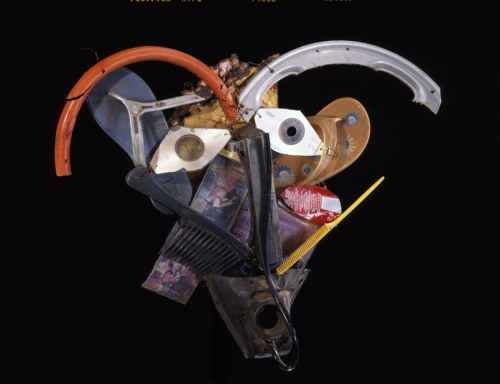
Calixte Dakpogan (Beninese, born 1958), Heviosso, 2007, Metal,  plastic (shoes and combs), CD, tape, H. x W. x D.: 74 x 55 x 28.5 cm),  Courtesy CAAC - The Pigozzi Collection, Geneva, © Calixte Dakpogan.
archiveafricanicon

Calixte Dakpogan (Beninese, born 1958), Heviosso, 2007, Metal, plastic (shoes and combs), CD, tape, H. x W. x D.: 74 x 55 x 28.5 cm), Courtesy CAAC - The Pigozzi Collection, Geneva, © Calixte Dakpogan.

Highly creative re-imaginings of the iconic form of the African mask comprise a unique installation at The Metropolitan Museum of Art. Featuring 20 works of art — 19 sculptures and one photograph — Reconfiguring an African Icon: Odes to the Mask by Modern and Contemporary Artists from Three Continents reflects on the enduring relevance of African masks as a source of inspiration for artists across cultures into the present.

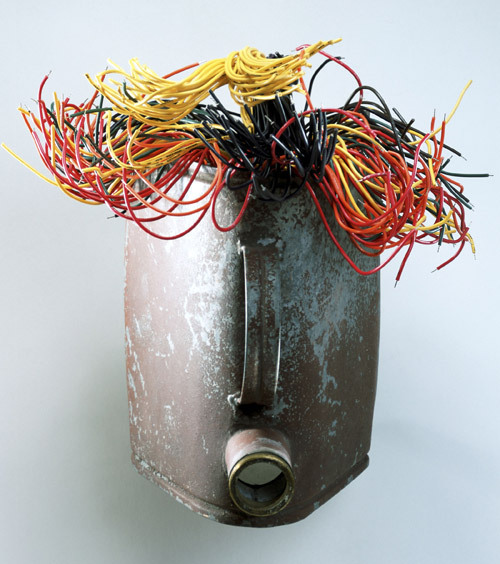
Romuald Hazoumé    (Beninese, born 1962), Internet, 1997, Metal  can, electric cables, H. x W. x D.: 32.1 x 29.8 x 27.9 cm, Courtesy  CAAC – The Pigozzi Collection, Geneva, © Romuald Hazoumé.
archiveafricanicon
Romuald Hazoumé (Beninese, born 1962), Internet, 1997, Metal can, electric cables, H. x W. x D.: 32.1 x 29.8 x 27.9 cm, Courtesy CAAC – The Pigozzi Collection, Geneva, © Romuald Hazoumé.

 
In many world cultures masks allow performers to adopt a wide range of characters and emotions. They can take on an endless variety of forms: human or animal; sacred or profane; dramatic or comedic. They are not meant to be experienced in isolation but rather as an integral component of celebrations, from the epic tributes to Dogon elders in Mali to popular holidays such as Halloween or the Day of the Dead and to the numerous Mardi Gras carnivals held throughout Europe and Latin America.
It is well established that African art forms, most notably the mask, were a source of inspiration for modern artists such as Pablo Picasso, André Derain, and Henri Matisse in the early twentieth century. The aesthetic of the African mask thus contributed to a redefinition of the Western visual lexicon. Considered especially alluring were its accessible reimagining of the human face and its aura of inscrutability.
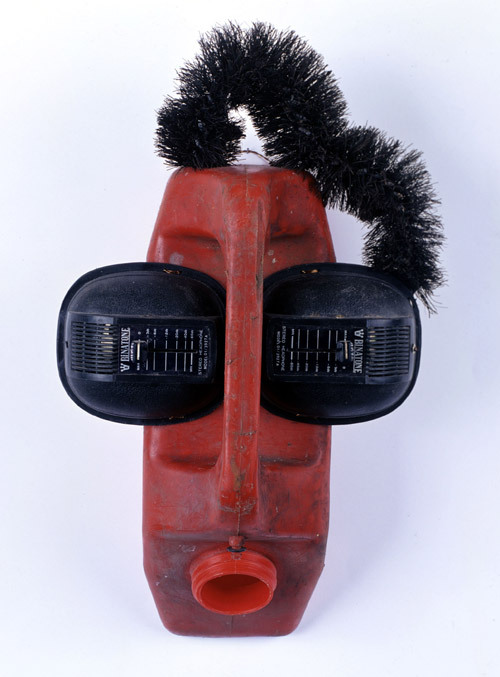
Romuald Hazoumé (Beninese, born 1962), Ear Splitting, 1999, Plastic can, brush, speakers 42 x 22 x 16 cm, Courtesy CAAC – The Pigozzi Collection, Geneva, © Romuald Hazoumé.
archiveafricanicon
 
Romuald Hazoumé (Beninese, born 1962), Ear Splitting, 1999, Plastic can, brush, speakers 42 x 22 x 16 cm, Courtesy CAAC – The Pigozzi Collection, Geneva, © Romuald Hazoumé.


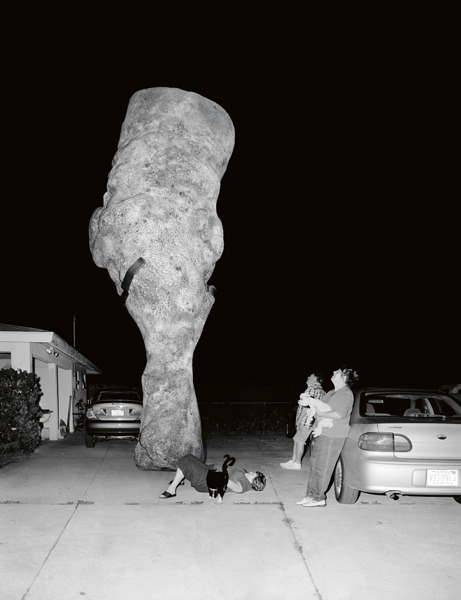
This selection of works from Africa, Europe and the United States attests to the enduring relevance of the African mask in modern and contemporary art. The five artists represented here—Lynda Benglis, Willie Cole, Calixte Dakpogan, Romuald Hazoumé, and Man Ray—have all used the African mask as a catalyst for creative exploration. Their works reflect on a century of viewing the mask as a disembodied form—that is, as an art object in a museum removed from its original performative context. Informed by his or her respective individual experiences, each artist harnesses the transformative ability of unconventional materials to achieve unexpected reinterpretations of the idiom
African masks are often thought of as carved wooden artifacts, but they are an inherently complex and dynamic art form: to fully appreciate them, one must view them in motion, animated by costumes, dance, and music; the various media added to their surfaces are thought to imbue them with mystical powers; and the influence of foreign materials and techniques have led to a continuous redefinition of the genre. Such dynamism finds parallel expression in the work of these five artists, all of whom operate outside these traditions. Responding to the sheer physicality of the mask while alluding to its spiritual quality, each of their works pays tribute to the powerful legacy of the African mask and its infinite potential for reinvention.
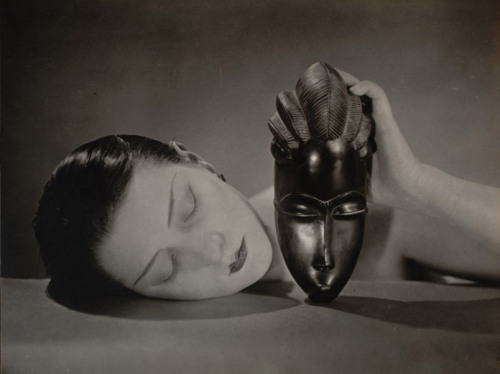


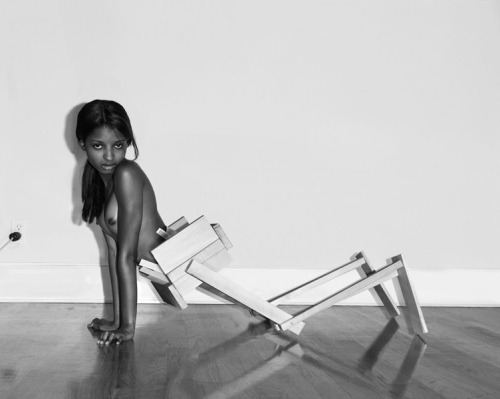
Man Ray (American, 1890-1976), Noire et Blanche, 1926, Gelatin  silver print, Private collection, New York, © 2011 Man Ray Trust /  Artists Rights Society (ARS), NY / ADAGP, Paris.
archiveafricanicon
Man Ray (American, 1890-1976), Noire et Blanche, 1926, Gelatin silver print, Private collection, New York, © 2011 Man Ray Trust / Artists Rights Society (ARS), NY / ADAGP, Paris.
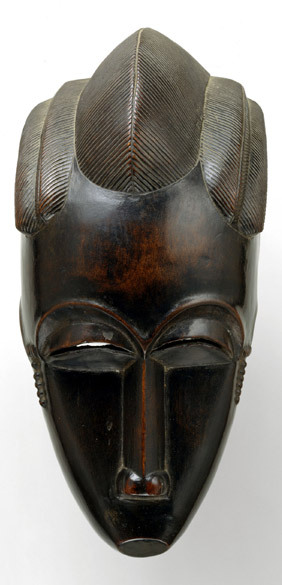
Portrait Mask (Gba gba), Cote  d’Ivoire © Baule peoples, before 1913,  Wood, 26 x 12.4 cm, The Metropolitan Museum of Art, New York, Bequest of  Adrienne Minassian, 1997 (1997.277).
archiveafricanicon
Portrait Mask (Gba gba), Cote d’Ivoire © Baule peoples, before 1913, Wood, 26 x 12.4 cm, The Metropolitan Museum of Art, New York, Bequest of Adrienne Minassian, 1997 (1997.277).


Surveying Contemporary and Modern African Masks as Sculpture
Metropolitan Museum of Art
1000 Fifth Avenue at 82nd Street
212-535-7710
New York

Reconfiguring an African Icon: Odes to the Mask by Modern and Contemporary Artists from Three Continents
March 8-August 21, 2011

via

Thursday, March 10, 2011

Wrong • The Questionable Reality of Asger Carlsen

Wrong : Asger Carlsen

The Doctor Is In(sane) : The Questionable Reality of Asger Carlsen
What are these?  They appear at first, like so many photographs do, as candid moments, mundane vernacular portraits or documents of small news events from the pages of a weekly local paper.  The on-camera flash blasts in with that harsh direct light we are used to seeing in our family albums, the black and white palette inexplicably adding to their authenticity (why is that?).  They are familiar, and there is nothing out of the ordinary in these photographs except everything. Are they even photographs? I think of the bumper sticker, stuck upside-down that reads "Question Reality", where the gesture itself is a visual pun of it's own sentiment.  The "truth" of photographs has always been in question, but in these images, it's the un-truth you are left wondering about, like vivid hallucinations you see out of the corner of your eye. They are optical illusions in the grandest sense, doctored images with invisible scars. I can look and know that no one has two functioning wooden legs, but there he is, vacuuming the floor. There he is, stopped at a red light on his motorcycle, and I believe in him, over and over. There is a funny expression that people use online in reaction to awful or disturbing images: "Cannot Un-See!" they say in dismay. The image is burned in, the damage is done. I cannot un-see the alternate reality that Asger has created in these images. I am convinced.
- Tim Barber
NYC, March 21, 2010


Wrong : Asger Carlsen


Wrong : Asger Carlsen

Tuesday, March 08, 2011

Design Is Culture • Lutz Rudolph


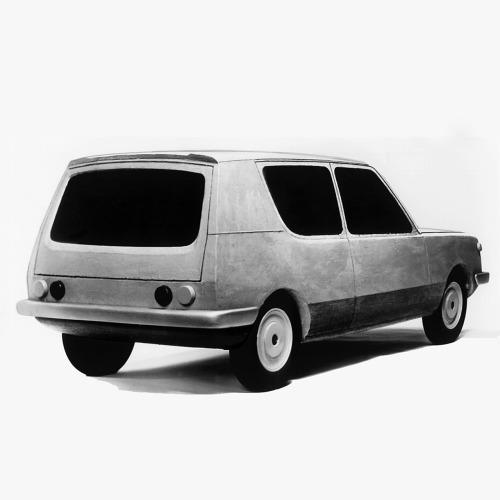
Lutz Rudolph, a charming, little, silver bearded man, started working as a freelance designer back in the early sixties in the former GDR.  This unusual independence, most design was done inhouse by permanent employees,  was as beneficial as it was hindering. While many design concepts never became real, like the pictured concept car from 1966, it offered the chance to work in total different fields from cutlery to radios to cars to lamps. Even so often ignored by the bureaucratic system, Lutz and his fellow Clauss Dietel managed to create an impressive collection of well designed products that can best described as literal simply beautiful. The beauty of their creations was always based in their functional quality. Lutz never was a luxury designer, he put as much effort into the usability as into the production process. For the series, design for mass production, was his declared goal, assuring that his designs became affordable.  And so, against great odds, the duo  inspired the average life in the GDR with a gentle touch of Bauhaus. Today, many of their creations are considered design icons. Lately Lutz spend most of his time together with his wife in an enchanted, century old cottage on the island Ruegen. Those who managed to find the way to his hideaway were rewarded with long night chats at the chimney. Scintillatingly witty talks about art, culture and all with a sincere artist from head to toe.
Lutz Rudolph passed away on Monday 7th of March in Gera. He will be deeply missed.

photo: Trabant P 603, Steilheckvariante, design by Dietel and Rudolph 1966.  Clauss Dietel und Lutz Rudolph - Gestaltung ist Kultur, Chemnitz 2002

Sunday, March 06, 2011

MUSE: A Savage Cocktail (with a Dash of Bitters, Please)


Kudos all around for Massimo Salvato’s Muse, which keenly interposes the almost sepia-soaked world of earnest creativity with the LED-infused shock of the lean, mean and too clean new century that each of the two writers inhabit.

We see the story unfold with the three principal characters locked in the uncomfortable embrace of creative exploitation, resignation and cynicism.

Jules Mallory Skinner’s “Monty” is a reclusive poet spurred toward creative resusitation by Ludmilla (played erratically by Julia Krynke); a woman besotted with her role as the inspirational force behind two very different men. Equally obsessed is Richard Elfyn’s “Walter”(a personality best summed up by the description “wide lawn, narrow mind”).

It’s Elfyn who strikes the most plausible note here in his standout performance. His emotional directness sears as he stares unflinchingly into the camera – his gravel-tinged confessional a perfect complement to the oppressive psychological atmosphere.

Krynke’s “Ludmilla” seems more sterile than the piece requires – alternating a firm lock on her character with intermittent lapses, as the script also exposes bouts of incontinuity breaks in flow and style. There are however several instances of greater flavour added to the written pot.

Adam Harvey’s musical scoring shows admirable restraint, subtly supporting the entire paintbox of colour that Salvato brings to life in an understated surge at the film’s conclusion.

Muse seduces again with the weaving of darkness and light and turns their standard symbolism on its head in a reversal of value. The scene changes are arrestingly crisp and fresh and we are treated to a sumptuous visual feast of images; a snail crawls toward the high set keys of an old typewriter, a tank sits amidst the scrabble of a trodden field, an aerial view of divided farmland stretches out like
gauzy velvet before us.

All said, this is a high level offering. Fine editing and deft cinematography contribute toward making the viewer wish to see this long short expanded into a feature length (indeed it does strike one as a clip from a lengthier effort), as a desire to remain longer in the world that has been created.
One is ultimately left with a strong interest in seeing what will be up Massimo Salvato’s creative sleeve next.

-Angela Turk

MUSE by Massimo Salvato GB 2010 20 min | Screened in European Premiere at the 7th Berlin International Directors Lounge

Photo: Julia Murakami and Massimo Salvato at the 7th Berlin International Directors Lounge

Sunday, October 10, 2010

part of the art


part of the art, two JGP residing inside an art work by Anett Lau 


Some more sightings of the infamous Japanese Guerilla Paparazzi who seems to be almost anywhere at the Berlin art fair week, sneeking into art as well as into artists.


part of the art fairs, a JGP claiming to be on 7th Berlin Kunstsalon, while in fact in front of a photograph by MUT showing Toni Lin Zeidler, claiming to be part of Circus Minimus, while in fact both are at Fridey Mickel´s party at LA54


part of the artist, a JGP residing on top of Emil, one of the most influential cognitive mentors of the Berlin art scene.

Wednesday, October 06, 2010

the 7th. Berlin Kunstsalon

movers and shakers: Edmund piper, Spunk Seipel with friend and JGP


Yesterday´s opening of the 7th Berlin Kunstsalon was the start for the annual art fair craze. The Kunstsalon moved to a new location, a cozy former slaughterhouse now called a station. The opening was foremost a meeting of all and everyone who´s into the Berlin art scene, even the infamous Japanese Guerilla Paparazzi popped up. A cool night and a nice start into this year´s fair frenzy.

 Here´s looking at you, kid: Joachim Seinfeld and JGP


Sculptures by Calla Mar and JGP


 Birdhouse by Calla Mar

Tuesday, September 28, 2010

M FOR FAKE


Marriage and Shams in Nataša Drakula’s Art

“A marriage of convenience is a marriage which one needs for the convenience of papers.” Anonymous

Getting married in Germany is a very elaborate affair – at least in terms of the preparation involved. Some fairly absurd steps are added to the process if one of the people getting married is a foreigner. No trace of romance. Nataša Drakula approaches the subject from an artistic point of view. In her works, she separates the individuals from the abstraction of the current integration debate.

The exhibition at the Meinblau art house is prefaced by a video of the artist’s own wedding, making it very personal. A PERFECTLY NORMAL WEDDING shows observers the protagonists and the photos of an apparently joyful and cheery wedding. But are the scenes portrayed really what they seem to be?

The multichannel installation M FOR FAKE contrasts this example with other marriages – marriages of convenience, marriages for protection, sham marriages. Nataša Drakula questions various anonymous participants about their experiences and motives, their fears and desires. Through images and audio, those concerned reveal which existential discussions they had with their partners and when decisions had to be made for the sake of papers or the government.

The viewer gets an idea of the inequality of the partners in a binational marriage. The question of residency is thus a strain on every friendship, and many relationships collapse under the pressure. Even when people marry out of love, the government often suspects them of entering into sham marriages. In reference to her most recent works, Nataša Drakula says, “With this project, I am trying to show the absurd phases of life that many people are forced through and the meaning they draw from these experiences. In so doing, I hope to contribute to a better understanding between foreigners and Germans, maybe even to loosen these classifications.”

Nataša Drakula, born in former Yugoslavia, has been living in Germany since 1991. She studied at the University of the Arts Bremen and received her Master of Arts from the Berlin University of the Arts. Nataša Drakula works as an instructor of visual communication at numerous German universities and art schools and gives lectures at symposia. The Meinblau gallery is hosting the premiere solo exhibition of the artist, who lives in Berlin and on Hvar.