Showing posts with label photography. Show all posts

Tuesday, March 20, 2012

The Groovy Dada Lounge Revisited


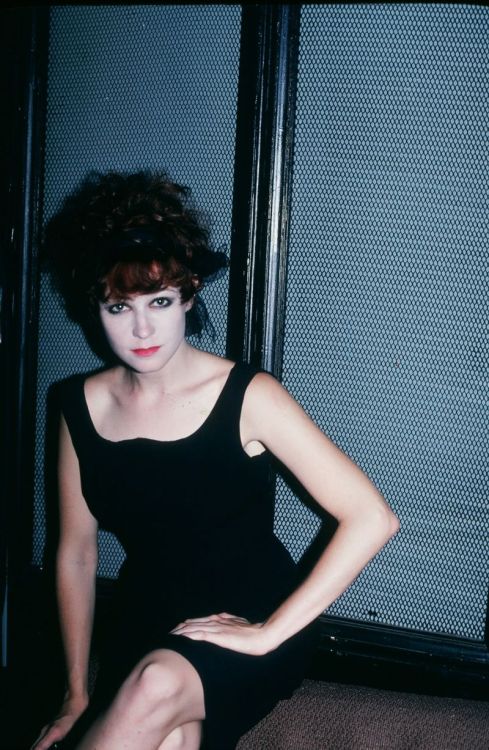
Ann Magnuson when she was the manager of Club 57 
by Robert Carrithers 

 
Photographs by Robert Carrithers: Basquiat, Haring, the New York scene in the 1980s and the infamous Club 57.
 
At Fotograf Gallery, Školská 28, Prague

One staircase led to heaven the other to hell” says Robert Carrithers of a building in New York’s St. Mark’s Place Street, number 57.  The building whose basement housed, in the late 1970s and early 1980s, Club 57 - a creative laboratory for all non-conformists and free-thinkers from the East Village - actually belonged to the central offices of the Polish Catholic Church.

At that time New York was a city on the verge of bankruptcy and today’s luxurious East Village resembled a war zone. Refined citizens had long ago left the area as part of a progressive suburbanisation.  The area with burnt up brick buildings – a last ditch attempt by desperate property owners to earn some money was more than often insurance fraud – was left in the hands of drug dealers, immigrants and also artists working in all disciplines. The police didn’t even bother to patrol there, which was good for anyone annoyed by having the authorities riding their back, artists and criminals alike.  “It was often a matter of life and death.  You had to have eyes in the back of your head and constantly watch what was happening in the street. It was so intense that sometimes you would find a corpse lying on the sidewalk,” recalls Carrithers, who moved to New York from Chicago in 1979. He wanted to study photography, film and acting there.  The apartment that he could afford to rent was less than a 10-minute walk from Club 57.

The punk and disco scenes concentrated around the CBGB and Studio 54 clubs were losing their sense of novelty and originality, when out of nowhere a performer like Klaus Nomi appeared.  This was a man, who sang opera in the costume of a Dutch Pierrot.  Club 57 was in fact founded by two friends, who loved vaudeville – Susan Hannaford and Tom Scully – and was run by director and performer, Ann Magnuson (pictured above), who hosted its first performance.

“This place was fascinating in that, while artists had earlier met in bars or at concerts, they chatted and they drank, but in Club 57 they created something together.  Here concerts mixed with exhibitions and performances,” stresses Carrithers, when speaking of the community that first made him feel at home.  Ann Magnuson thought up theme parties for every other night of the week.  She found the decor and the furniture in the streets. Keith Haring had his first installation there and created his signature work, as did Kenny Scharf and Jean Michel Basquiat.

Club 57 exorcised America’s evil spirit. It went wild from “camp” aesthetic.  With a Dadaistic fascination and vigour, it seized on the suburban supermarket culture; stores that had become museums of the contemporary lifestyle and its plastic kitsch.  During one evening a country-western evening might take place on piles of hay, the next a burlesque event and an Elvis memorial, then a performance showing John Sex performing with his python snake Delilah or a concert by singer, Wendy Wild, and her group, The Mad Violets, which took the public on a joint trip, when hallucinogenic mushrooms were thrown into the crowd.  The group, Pulsallama, was also born here.  This was a group of twelve or thirteen girls, who sang in the style of Greek chorales, and when doing so banged on beer bottles, pans, cowbells and shot off kids‘ toy machine-guns.  Pulsallama made it so far that in 1982 they were the opening act at several concerts by The Clash.
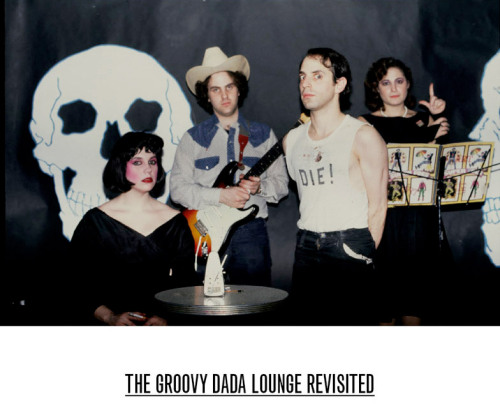

Even almost thirty years after its closing in 1983, Club 57 is still a legend that defined a period of pop culture and still inspires it.  Many of the artists tied to the institution were unable to face up to their own wildness, drugs or the incontrollable rise of AIDs.  They died.  Others died only to become immortal (Haring, Basquiat).  Others survived to become famous later (Ann Magnuson, Marc Shaiman, Scott Whitman). Robert Carrithers was one of them.  He spontaneously documented everything that happened in the club.  The performances, the birth of success, the first exhibitions and the backstage area.  In his moment shots and portraits, which will be shown for the first time in the Czech Republic, barmen meet with writers, film-makers and future celebrities.  Thus a unique testimony was created; one that is as unbridled image-wise as the Club 57 program.

Robert Carrithers is an American photographer and film-maker, who lives in Prague.  Besides the Club 57 scene he documented the post-November cultural scene in the Czech Republic and has been working for a long time on the series, Bohemian Nude.  He is preparing a documentary on the Prague-Berlin-Australian, post-punk band, Fatal Shore. He also took part in the making of the documentary Autoluminescent about the Australian musician Rowland S. Howard (dir. Richard Lowenstein). In February he was part of The 8th Berlin International Directors Lounge not only as a director, but olso as a photographer documenting the 11 day film and club frenzy.


The Groovy Dada Lounge Revisited, Fotograf Gallery, Školská 28, Prague

21 March – 20 April 2012
     
Opening attended by the artist:
20 March, 18:00–21:00

Guests:
DJ Miki
Mark Steiner & His Problems
A showing of films of Cinema of Transgression by Nick Zedd

Curator: Pavel Turek

Wednesday, January 11, 2012

Twilight Zone


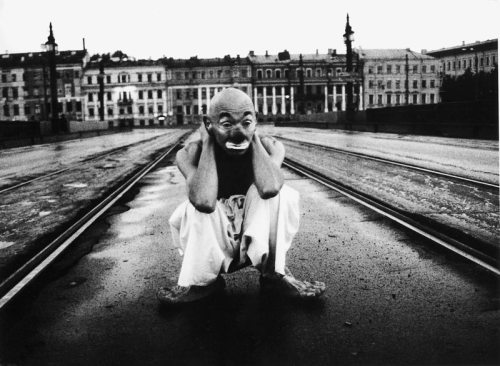
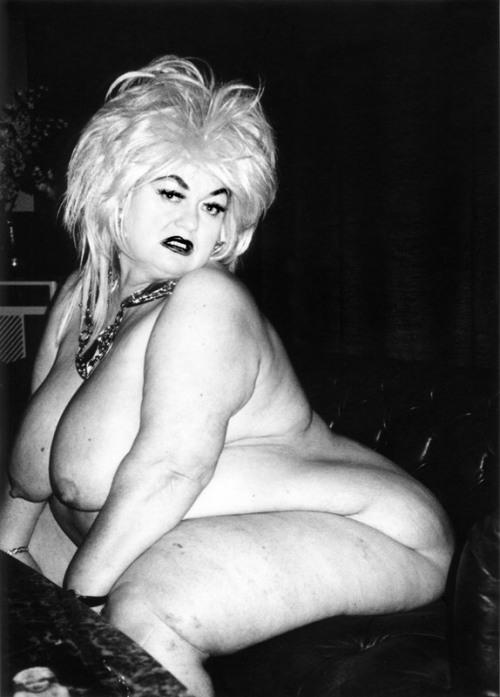
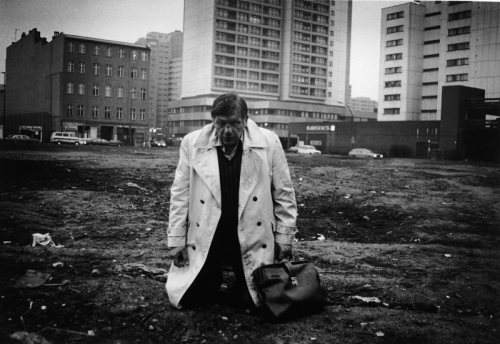
Miron Zownir, once labeled by the American author Terry Southern as THE POET OF RADICAL PHOTOGRAPHY, took up photography in the late 70s during the hey-days of the punk-phenomenon, delivering a tight portrayal of the movement and its peculiar attitude towards life in limbo between a utopian vision of anarchy and nihilistic self-destruction.

In 1980, he emigrated to the USA, where he lived for the next fifteen years; first in New York, then in Los Angeles, and Pittsburgh. In New York, back then arguably the world's most fascinating and permissive metropolis, Zownir's peculiar approach to cover the city's multiple-layered day-to-day lunacy was quickly recognised by the local scene and earned him a reputation as the TEUTONIC PHENOMENOGRAPHER (Village Voice).


Shot in moody, expressionistic b/w, Zownir's pictures from that period give a penetrating insight to inner-city sub-cultural spheres, which, in their original local context, have since perished in the boom of the 90s. His lens captured the untamed lust at the gay-parties, just shortly before Aids massively claimed its victims; the futile protest of artists and offbeat performers against the increasing commercialisation of Manhattan; the hopelessness on the Bowery; the shadowy world of hookers, bums, junkies.
During his long residence in America, Zownir worked not only as a photographer but also ventured into filmmaking, an ambition he had held since the mid-seventies. He wrote and directed several short underground films, which were mainly produced by Chosei Funahara, founder of the legendary band 'Plasmatics'.
In Berlin, Zownir's home since his return from Russia, he directed the documentary film BRUNO S. - ESTRANGEMENT IS DEATH, a feature-length portrayal of Bruno S., the backyard musician, painter and main protagonist of Werner Herzog's films THE ENIGMA OF KASPAR HAUSER and STROSZEK. ESTRANGEMENT IS DEATH was shown at the 2003 Berlin Film Festival, and numerous other international film festivals.
The focus on extreme subjects and extraordinary forms of the human condition continued to be the central motivation of Zownir's work.


Miron Zownirs surreal drama feature debut PHANTOMANIE was completed in autumn 2008. For the first time since decades Bruno S. again plays a leading role in in Zownirs movie which is shot in Berlin right now. In the midst of a cold, despising world he gets involved as a lonesome commuter between dream and reality.
Lately he collaborates with Birol Uenel and FM Einheit in setting up intense lectures of his book "Parasiten der Ohnmacht".


TWILIGHT ZONE at Emmanuel Post Gallery, Berlin
Grolmanstrasse 46, 10623 Berlin

January 14 - March 3, 2012, Tuesday - Saturday, 12 - 7 pm

Opening reception: Friday, January 13, 2012, 7 pm


Wednesday, May 04, 2011

habits make us blind

‘habits make us blind’  1/4
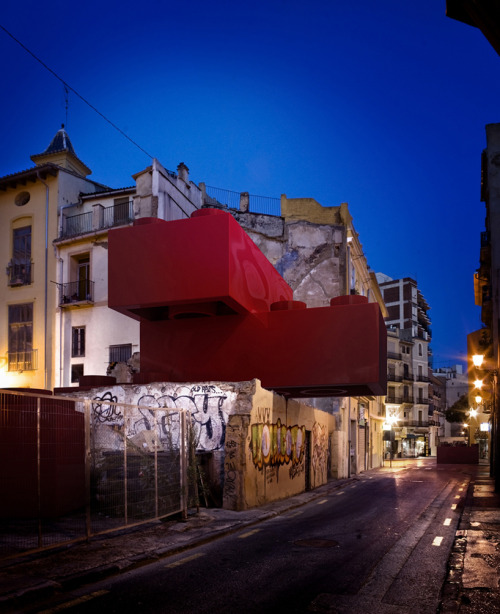
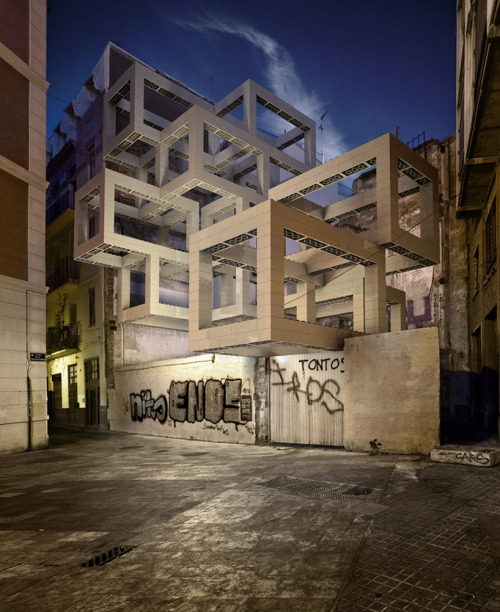
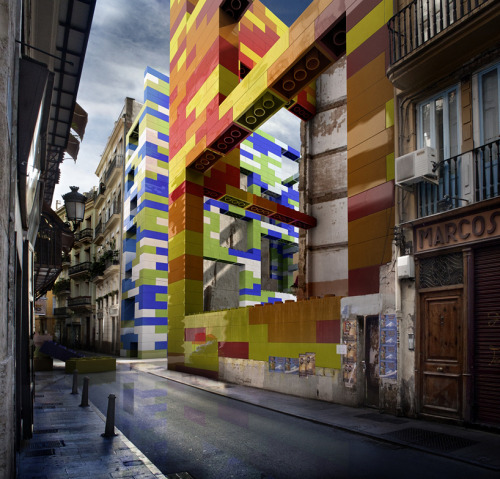
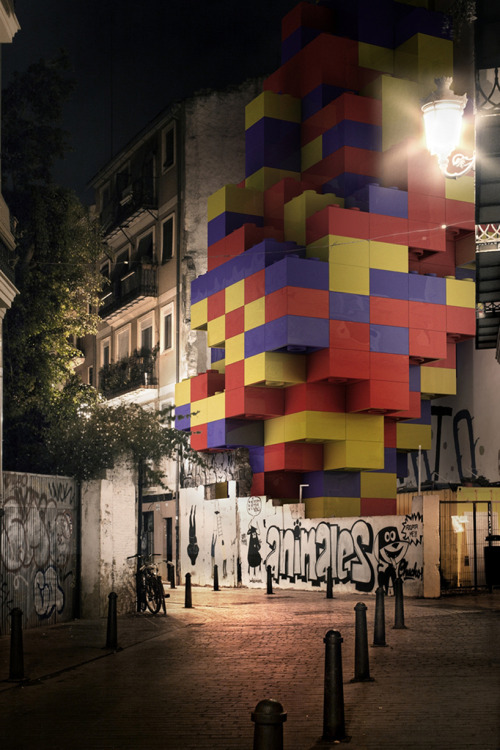
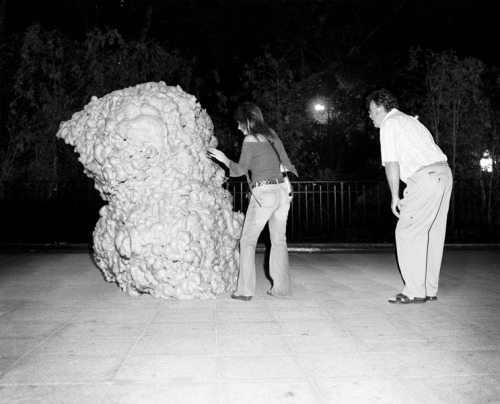
 Spanish architecture studio espai MGR’s ‘habits make us blind’ is a photographic series of work which addresses the vacant lots in downtown valencia, which they pass everyday.
habits make us blind
‘habits make us blind’  1/4


 Spanish architecture studio espai MGR’s ‘habits make us blind’ is a photographic series of work which addresses the vacant lots in downtown valencia, which they pass everyday.
‘…like an invisible metastasis generated in the heart of the city and extending to all its arteries. neighborhoods that, although having huge potential, lay unused, not promoting a good means of sustainable development. We recognize this as a typical theme in the central neighborhoods in valencia. sometimes, the tourists are the city’s
inhabitants pay attention to the issue at hand for a moment because secondary problems stemming from those spaces implied affect us directly. however, in most cases, they are only a part of daily way of life. this photographic body of work aims to call people’s attention to these neglected spaces. it demands the recreational use of these vacant lots as seen through the eyes of a child, by filling them with impossible constructions, surrealistic installations in line with the problem. (…)’
architecture studio espai MGR
‘habits make us blind’  2/4

‘…like an invisible metastasis generated in the heart of the city and extending to all its arteries. neighborhoods that, although having huge potential, lay unused, not promoting a good means of sustainable development. We recognize this as a typical theme in the central neighborhoods in valencia. sometimes, the tourists are the city’s  inhabitants pay attention to the issue at hand for a moment because secondary problems stemming from those spaces implied affect us directly. however, in most cases, they are only a part of daily way of life. this photographic body of work aims to call people’s attention to these neglected spaces. it demands the recreational use of these vacant lots as seen through the eyes of a child, by filling them with impossible constructions, surrealistic installations in line with the problem. (…)’
architecture studio espai MGR

(via habits make us blind)
‘habits make us blind’  4/4
(via habits make us blind)

Sunday, March 20, 2011

Tomorrowland

B
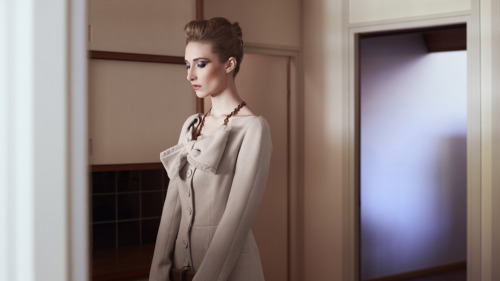
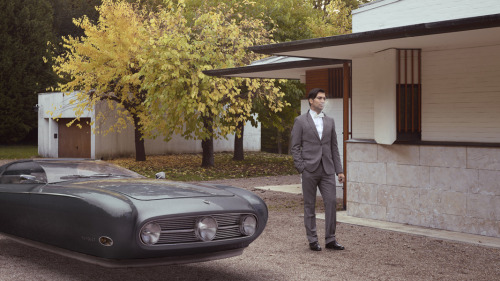
en Sandler´s Tomorrowland
A retrofuturistic, ambiguous universe of disorder and design where cars can fly and time stands still.


Ben Sandler´s Tomorrowland
A retrofuturistic, ambiguous universe of disorder and design where cars can fly and time stands still.

Photographer: Ben Sandler; Stylist/Deco: Julie Vianey; Retouching: Pierrick @ Asile; 3D: Ben @ Asile; Casting: Olivier Duperrin; Homme: Edouard; Femme: Sylvija @ Idole; Fille: Jeannine @ Angels; Make-up: Corinne Gues @ B Agency; Rafael Pita @ B Agency; Hair: Emilie Chardonnet @ B Agency;


digged at the art resort


Photographer: Ben Sandler; Stylist/Deco: Julie Vianey; Retouching: Pierrick @ Asile; 3D: Ben @ Asile; Casting: Olivier Duperrin; Homme: Edouard; Femme: Sylvija @ Idole; Fille: Jeannine @ Angels; Make-up: Corinne Gues @ B Agency; Rafael Pita @ B Agency; Hair: Emilie Chardonnet @ B Agency;

Thursday, March 10, 2011

Wrong • The Questionable Reality of Asger Carlsen

Wrong : Asger Carlsen

The Doctor Is In(sane) : The Questionable Reality of Asger Carlsen
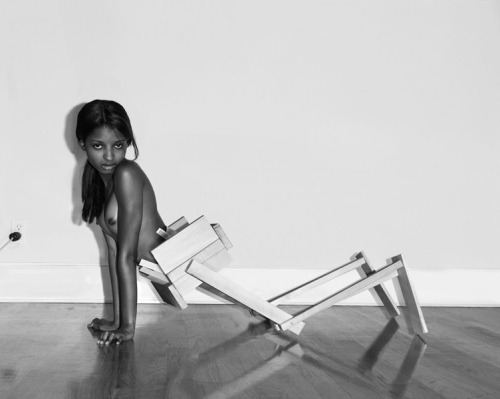
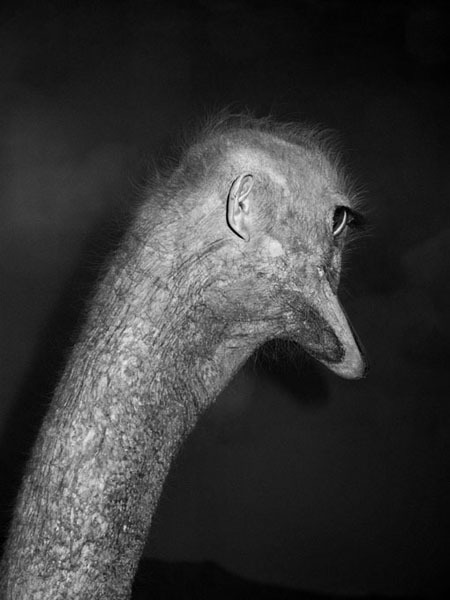
What are these?  They appear at first, like so many photographs do, as candid moments, mundane vernacular portraits or documents of small news events from the pages of a weekly local paper.  The on-camera flash blasts in with that harsh direct light we are used to seeing in our family albums, the black and white palette inexplicably adding to their authenticity (why is that?).  They are familiar, and there is nothing out of the ordinary in these photographs except everything. Are they even photographs? I think of the bumper sticker, stuck upside-down that reads "Question Reality", where the gesture itself is a visual pun of it's own sentiment.  The "truth" of photographs has always been in question, but in these images, it's the un-truth you are left wondering about, like vivid hallucinations you see out of the corner of your eye. They are optical illusions in the grandest sense, doctored images with invisible scars. I can look and know that no one has two functioning wooden legs, but there he is, vacuuming the floor. There he is, stopped at a red light on his motorcycle, and I believe in him, over and over. There is a funny expression that people use online in reaction to awful or disturbing images: "Cannot Un-See!" they say in dismay. The image is burned in, the damage is done. I cannot un-see the alternate reality that Asger has created in these images. I am convinced.
- Tim Barber
NYC, March 21, 2010


Wrong : Asger Carlsen


Wrong : Asger Carlsen